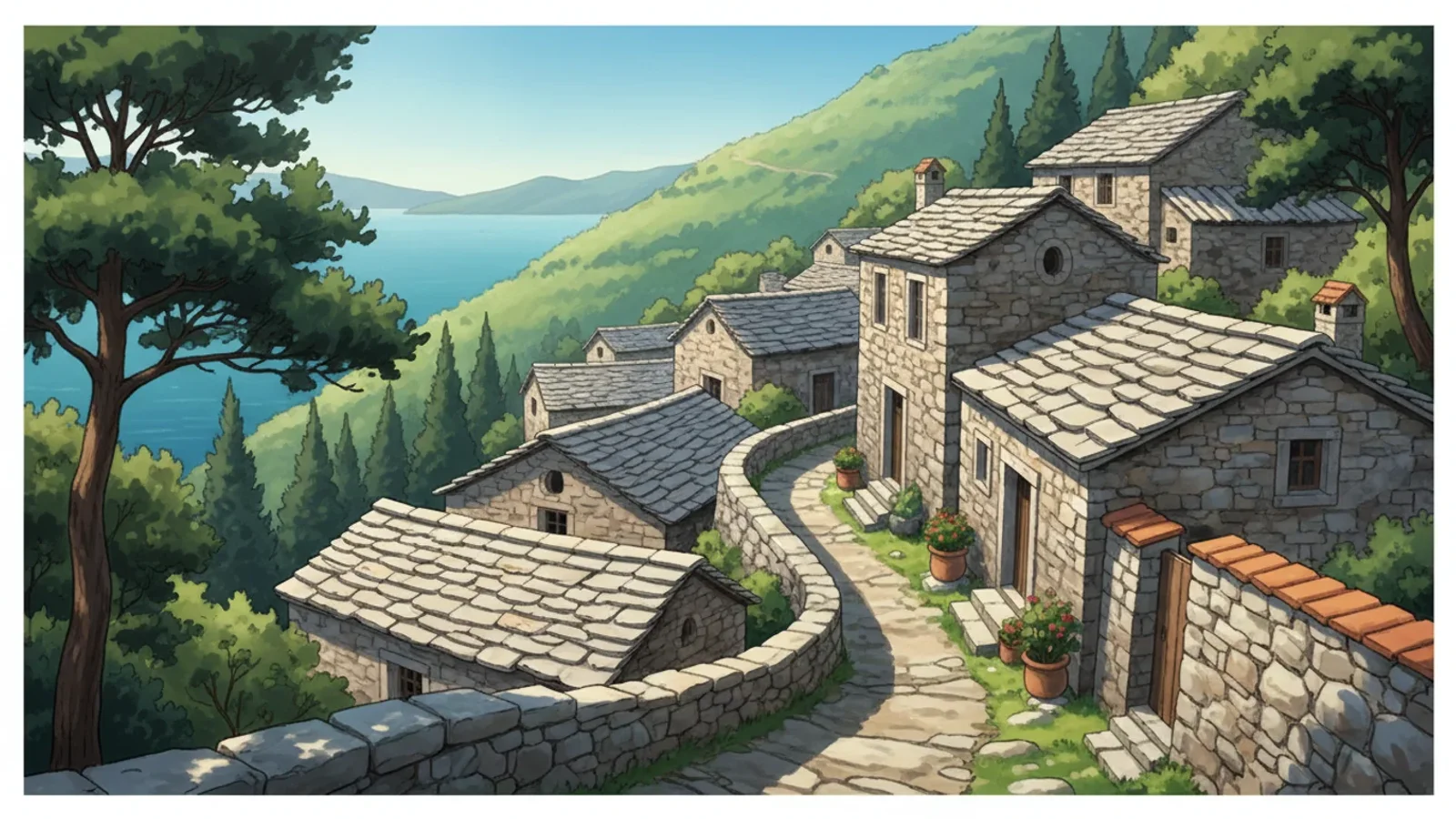
In the village of Žlijebi, situated at an altitude of approximately 700 meters above the Bay of Kotor, time feels different than down by the sea. There is no usual hustle and bustle here; every element of the landscape and every structure seems to slow down the course of events. The main feature that distinguishes Žlijebi from other Montenegrin settlements is the unique stone roofs of its houses, laid with flat slabs, and traditional dry-stone masonry, where stones are fitted together without mortar. This construction method, preserved over centuries, not only demonstrates the skill of local craftsmen but also forms part of the region's cultural code.
Geographical Location and Accessibility
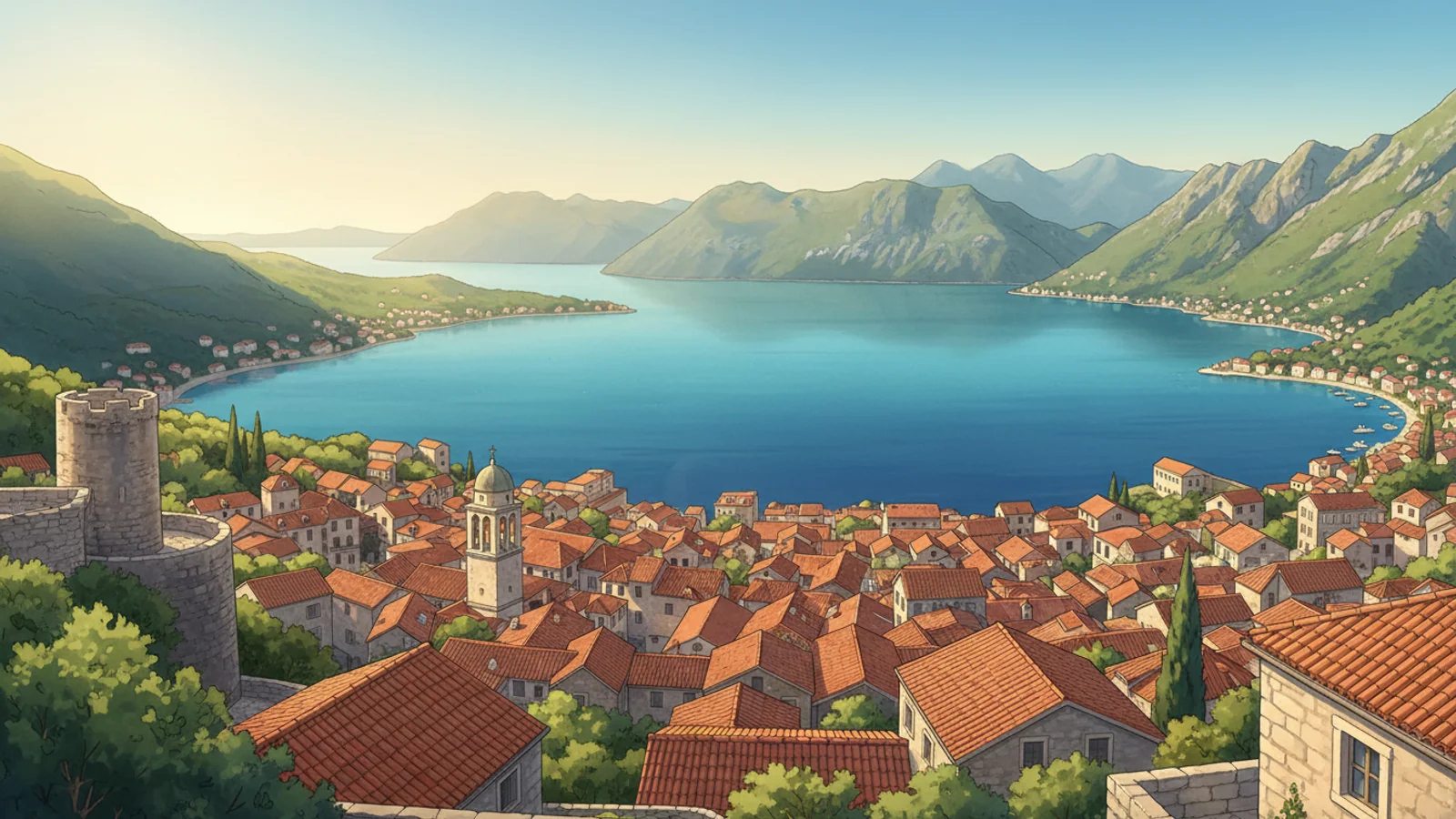
Žlijebi is nestled in the foothills of Herceg Novi, approximately 700 meters above sea level. It offers panoramic views of the Bay of Kotor. This is not merely a settlement, but a natural viewpoint from which the vast sea and surrounding mountains are visible.
Žlijebi's elevated position dictates its distinct climatic features, which differ from coastal areas. The air here is fresher, and summer heat is more bearable, making visits pleasant even during peak season. Its distance from the coast helps preserve a traditional way of life, less influenced by mass tourism than coastal towns.
Access to Žlijebi is via roads leading up from the coast. Visitors should be aware that the route is not always direct, and it will take time to reach the village. However, the effort spent on the journey is compensated by the unique atmosphere and views that unfold as one approaches this place, as if entering another world.
Despite its relative remoteness, Žlijebi is accessible to those seeking an authentic experience and willing to undertake a short journey inland. The absence of direct public transport underscores its secluded nature and helps maintain its untouched atmosphere, which is part of its appeal for travelers who value solitude.
Architectural Features: Stone Roofs and Dry Stone Walling
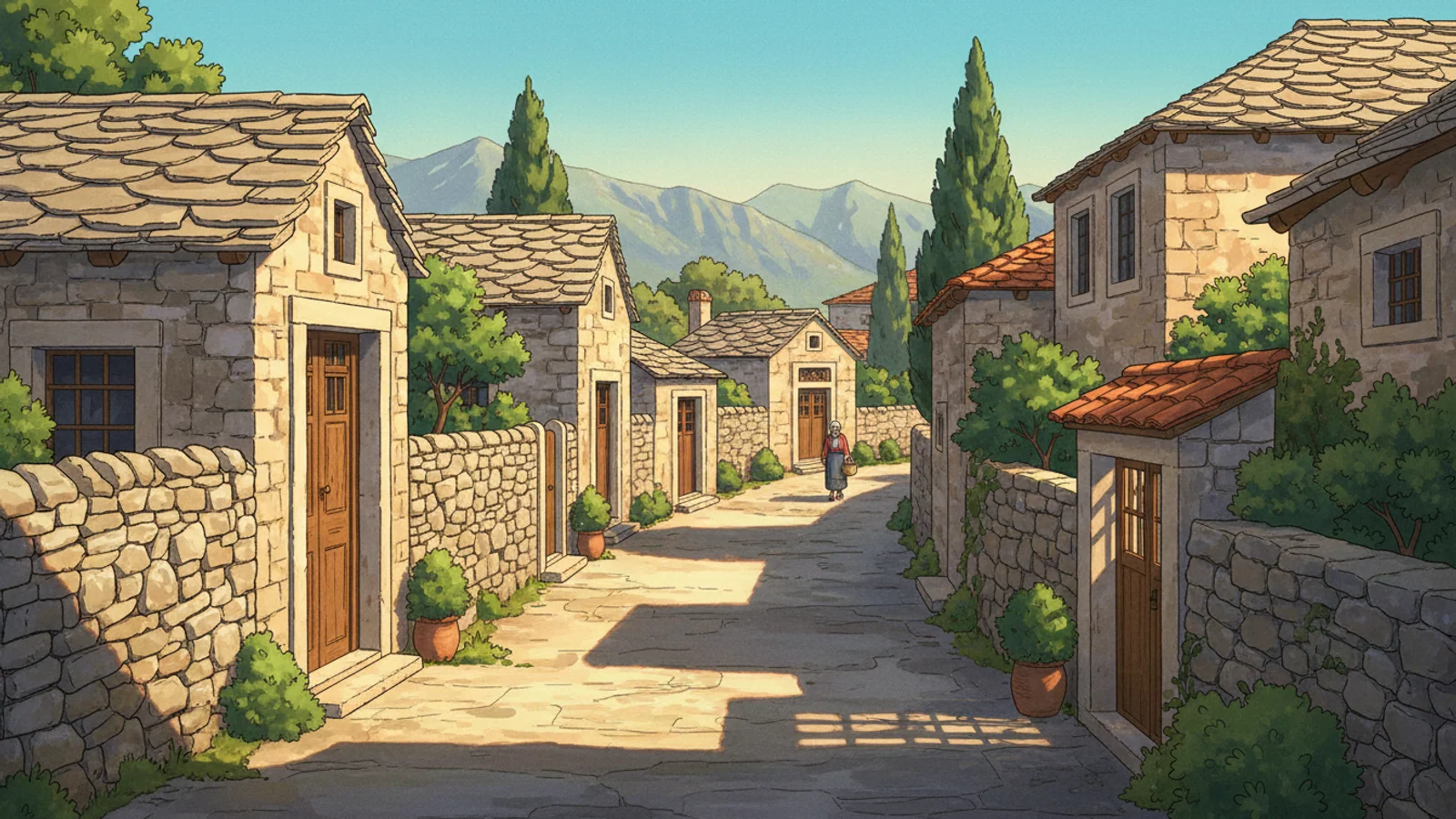
The main architectural feature of Žlijebi is its houses with flat stone roofs, covered with massive slabs. This traditional construction technique is not only functional, protecting against precipitation and sunlight, but also gives the village its recognizable appearance.
The dry stone walling technique, used in constructing the walls, is another distinctive feature of Žlijebi. Stones are laid without the use of binding mortar, which requires special skill and understanding of the material's properties. Such construction provides natural ventilation and resistance to seismic activity, characteristic of the region, demonstrating the engineering ingenuity of ancestors.
The houses in Žlijebi are organically integrated into the surrounding landscape, as if growing out of the rocks. The use of local stone for construction creates a unified ensemble with nature, emphasizing the harmony between human dwelling and the environment. These are not just buildings, but part of the natural and cultural heritage, reflecting centuries of adaptation to local conditions and available resources.
It is important for visitors to remember that these houses are private property, not museum exhibits. Respectful treatment of residential buildings and their inhabitants implies refraining from attempting to climb on roofs or walls for photography, so as not to disturb the peace of local residents and not damage the unique structures, preserving their pristine appearance.
History of Stone Quarrying: Centuries-Old Traditions
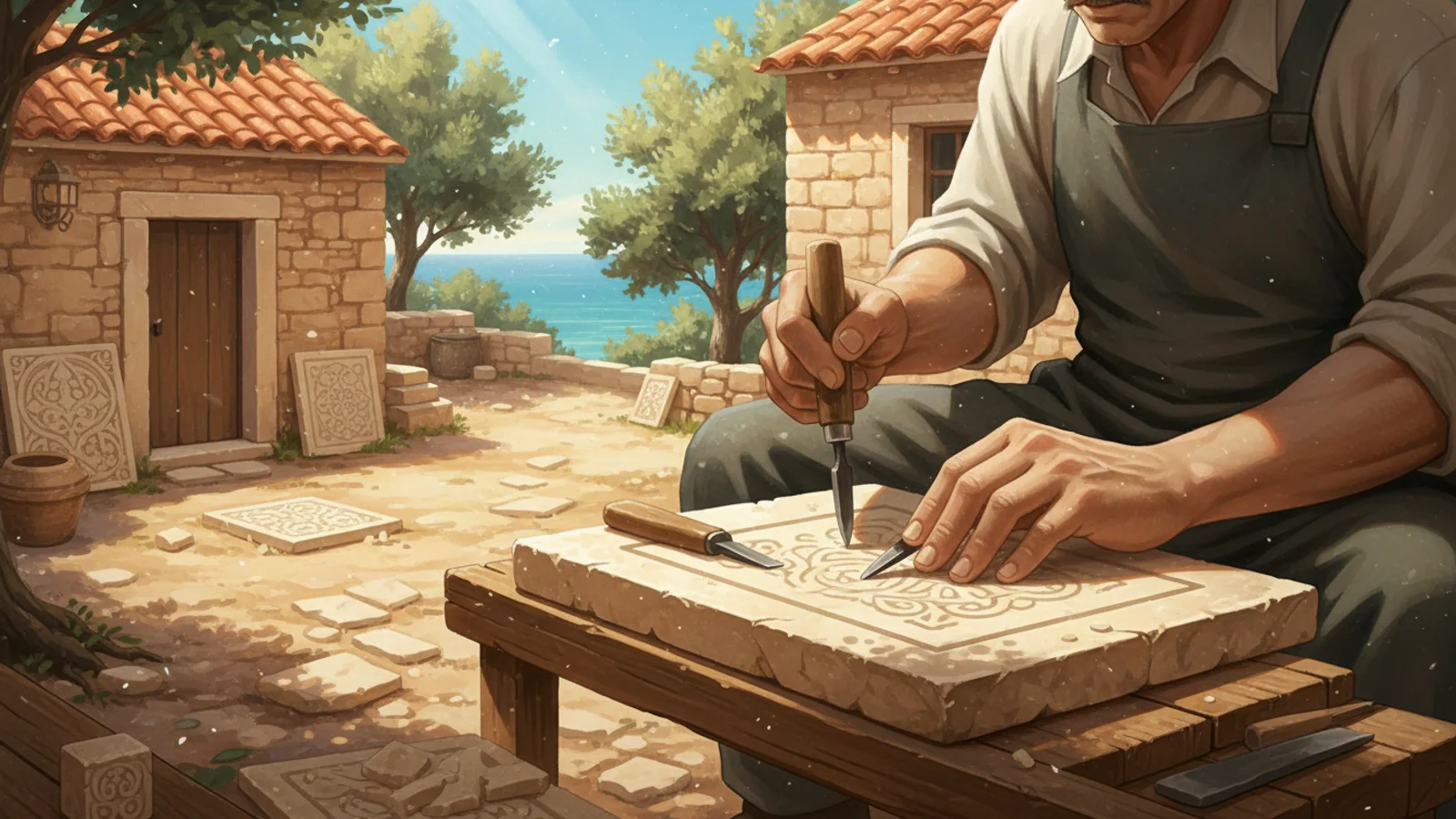
The history of Žlijebi is inextricably linked with the traditions of stone quarrying, which have shaped the village's appearance over many centuries. Local residents developed unique methods of manual stone extraction and processing, passed down from generation to generation.
Official tourist materials confirm the centuries-old manual method of stone extraction, testifying to its significance for the region's cultural heritage. Stone from Žlijebi was used not only for building local houses but also, likely, for other structures in the vicinity, confirming its high quality and value in the past and present.
The stone quarrying process was labor-intensive and required specialized tools and skills. The masters of Žlijebi knew how to select suitable rocks, carefully detach them from the cliff, and give them the desired shape. This was not just a craft, but an entire art that defined the economic life and social structure of the village, forming its unique character.
Studying the history of stone quarrying in Žlijebi allows for a deeper understanding of how this unique village was formed. It is not just a collection of buildings, but a living testament to human labor, ingenuity, and the ability to adapt to natural conditions, using available resources to create durable and functional structures that stand to this day.
Žlijebi as a Living Settlement: Respecting the Locals
Žlijebi, situated at an altitude of approximately 700 meters above sea level in the foothills of Herceg Novi, is a functioning small village, not an open-air museum. The daily way of life, shaped over centuries, is preserved here. It is important for visitors to remember that they are in someone's home, not a tourist attraction, which requires appropriate behavior and respect for the privacy of local residents.
When visiting the village, discretion should be exercised, avoiding noisy behavior and trespassing on private property. Photographing locals without their consent is not recommended, and attempts to peer into windows or walk through private yards may be perceived as an invasion of personal space.
Particular attention should be paid to the preservation of architectural elements. Climbing on the stone roofs of houses or dry-stone walls is prohibited. These structures are part of the residential stock and cultural heritage; their damage can have serious consequences for both residents and the preservation of Žlijebi's unique appearance.
Interactions with locals, if they occur, should be based on politeness and tact. Local products or souvenirs can be purchased if offered, which is a way to support the village's economy. However, residents should not be expected to act as guides or entertainers; they are busy with their daily lives, and their time should be valued.
Panoramic Views of the Bay of Kotor
From Žlijebi, an extensive panorama of the Bay of Kotor unfolds, offering a new perspective that differs from the usual coastal views. The village's elevated position allows for a sweeping gaze over a significant portion of the bay's waters and surrounding mountains, creating a sense of spaciousness and perspective.
The views from Žlijebi change with the time of day and weather conditions. Morning fog rising over the bay or evening sunsets painting the sky in various hues create dynamic scenes. This allows each visitor to see the bay in a unique light, free from the stereotypical angles often found in promotional brochures.
Observing the bay from such a height provides an understanding of its scale and complex geographical structure. Distant settlements, ships moving across the water, and even the outlines of mountains receding into the distance can be discerned. This is not just a beautiful picture, but an opportunity to more deeply understand Montenegro's landscape and its connection to the sea, appreciating its expanse and sinuosity.
Unlike views from the promenades, the panorama from Žlijebi is free from the hustle and bustle of coastal towns. Here, one can calmly contemplate natural beauty, feeling part of a wider space. The absence of fences and tourist infrastructure contributes to a more direct perception of the environment, without artificial barriers between the observer and the landscape, allowing for focus on the scenery.
Hiking Trails in the Vicinity of Žlijebi
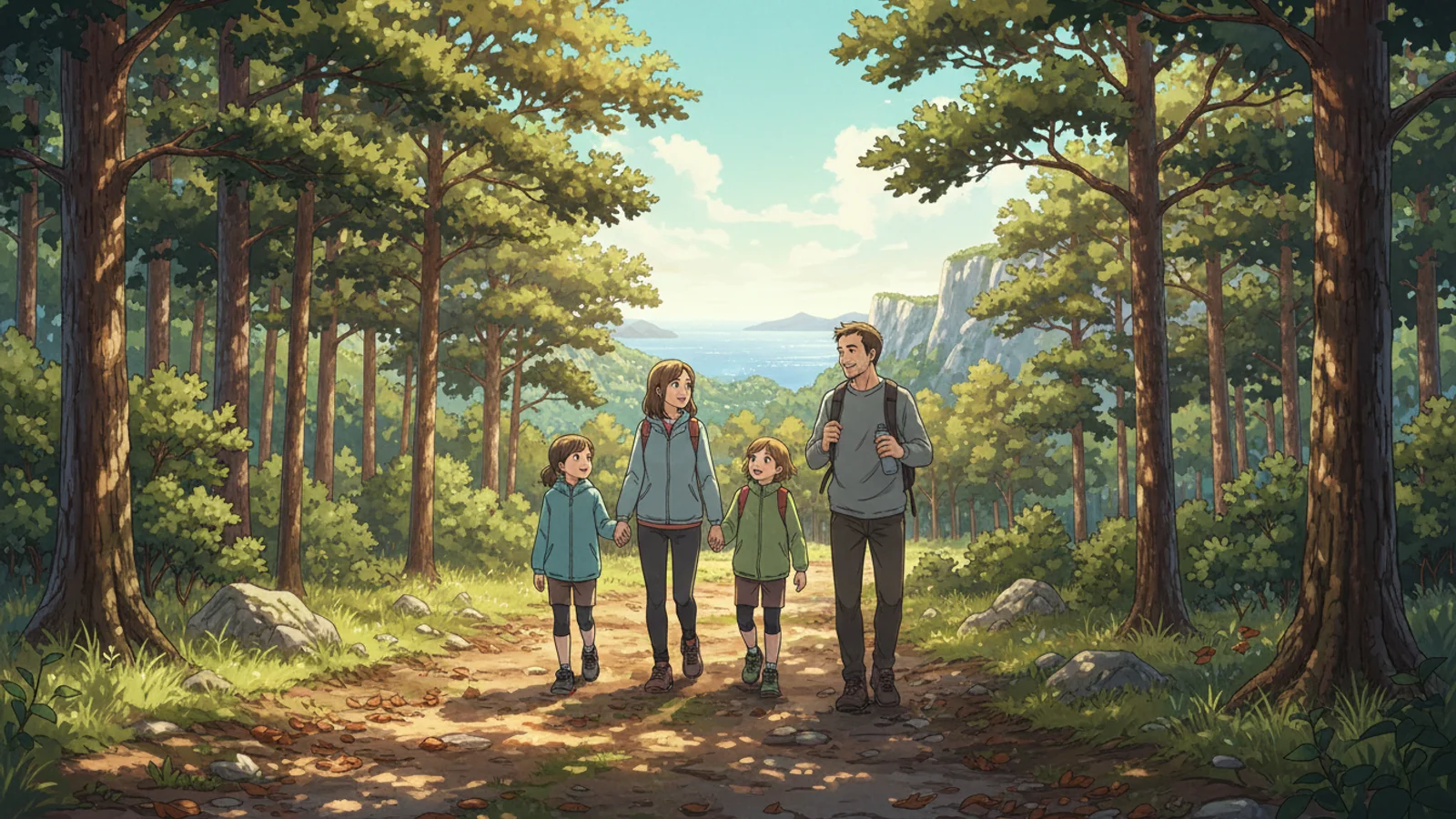
The surroundings of Žlijebi offer opportunities for hiking, allowing visitors to explore mountain landscapes and enjoy nature. Trails leading towards the Orjen mountain range start from the village, suitable for hikers of varying fitness levels.
When planning hikes, it is important to consider the characteristics of the mountainous terrain. Appropriate footwear, sufficient water and food supplies, and navigation tools are recommended. Some trails may not be clearly marked, so prior study of maps and route information is essential.
The trails around Žlijebi allow for observation of the diverse local flora and fauna, as well as an introduction to the traditional mountain landscapes of Montenegro. Old shepherd's huts, water sources, and areas of untouched nature can be encountered.
The duration and difficulty of the routes vary. Some trails may be short and easy, suitable for family walks, while others require good physical fitness and experience in mountain trekking. Before setting out, it is advisable to check the current condition of the trails and weather conditions, as these can change seasonally and affect passability.
Natural Environment and Vegetation
Žlijebi is situated at an altitude of approximately 700 meters above sea level, in the foothills of Herceg Novi, which shapes its microclimate. Both Mediterranean and continental plant species are found here, creating notable biodiversity. The slopes are covered with maquis, characteristic of coastal areas, but higher up the slopes, more resilient species adapted to mountain conditions also appear.
In spring, the surroundings of Žlijebi transform: wild orchids, irises, and cyclamens bloom, adding vibrant colors to the gray stone. In summer, the vegetation becomes drier, but the air is filled with the aromas of thyme and rosemary. This contrast with the lush greenery of the coast highlights the uniqueness of the mountain landscape, where nature demonstrates its resilience and adaptability to the conditions of altitude and rocky soil.
The fauna of the foothills is diverse, though not always easily noticeable. Small rodents, various bird species, including birds of prey soaring above the valley, and lizards basking on rocks inhabit this area. An attentive observer might spot traces of wild animals, which underscores the untouched nature of the surroundings.
The proximity to Orjen Nature Park means that the flora and fauna here are protected. Visitors are advised to stay on marked trails to avoid disturbing the fragile ecosystem. This helps preserve the pristine appearance of the landscape and its inhabitants for future generations, and also prevents accidental damage to rare plants that may be sensitive to interference.
Local Life and Customs
Žlijebi is not a museum, but a living, albeit small, settlement. People still live here, leading a traditional way of life, engaging in agriculture, and preserving age-old customs. Their daily lives are not part of a tourist attraction, so it is important to show respect for the privacy of local residents and their way of life, without disturbing their peace and usual rhythm.
Local residents often raise small livestock and grow vegetables and fruits on small plots of land. Their work is closely tied to nature and the seasons. One might observe them tending to their gardens or herding livestock along narrow paths, which is part of their daily routine.
The village's architecture, with its houses roofed with flat stone slabs and traditional dry-stone masonry, reflects not only aesthetic preferences but also practical necessity. These houses were built with local climatic conditions in mind, providing coolness in summer and protection from wind in winter.
Relationships among Žlijebi residents are based on communal traditions and mutual assistance. Despite the village becoming known to tourists, its inner world remains closed to outsiders. Respectful behavior towards their way of life means not entering private yards and not disturbing the peace, thereby preserving the authenticity of this place.
Photography in Žlijebi: Ethical Aspects
When photographing in Žlijebi, it's important to remember that you are in a residential village, not on a film set. Avoid photographing people without their explicit consent, especially children. It's best to establish contact first, smile, or say hello before pointing your lens.
When photographing architecture and landscapes, try not to enter private property. Stone walls and fences often mark property boundaries, and crossing them without permission is unacceptable. Use telephoto lenses to capture details from a distance without intruding on the personal space of the village inhabitants.
Žlijebi's unique stone roofs and walls are the village's hallmark, but they are also part of private property. It is strictly forbidden to climb onto roofs or walls of houses to get a better angle. This is not only dangerous but also a gross violation of conduct rules and disrespect for private property.
Remember that your goal is to capture the beauty and atmosphere of the place, not to create inconvenience for its residents. Respect their right to peace and privacy. A thoughtful and ethical approach to photography will allow you to get beautiful shots without disturbing the harmony of this unique Montenegrin corner. This will preserve the authenticity of Žlijebi for all visitors.
Best Time to Visit
Spring, from April to May, offers the most comfortable conditions for exploring Žlijebi. The air temperature during this period is moderate, which is ideal for hiking in the surroundings and studying the village's architecture. Nature awakens, mountain slopes turn green, and the blooming wild herbs add color to the landscape, creating a picturesque backdrop for exploration.
In autumn, from September to October, Žlijebi is also appealing. The heat subsides, the air becomes cooler, and this time is ideal for those who prefer to avoid the summer tourist peak. Autumn colors make the landscape particularly expressive, and visibility usually remains good for panoramic views of Boka Kotorska from an altitude of about 700 meters above sea level.
Summer months, especially July and August, can be hot, making long walks difficult. However, if you plan to visit during this time, it is best to choose morning or evening hours. The village's high elevation provides some coolness compared to coastal areas, but the sun can be intense, requiring protection.
In winter, from November to March, the weather in Žlijebi can be unpredictable, with possible precipitation and lower temperatures. Some roads may be less accessible due to weather conditions. Nevertheless, for lovers of solitude and rugged landscapes, this time can offer a special experience, but it requires more thorough preparation for the trip.
Preparing for Your Trip: What to Bring
For hiking in Žlijebi and its surroundings, comfortable and sturdy footwear is crucial. Roads and trails can be uneven and rocky, so sneakers with good cushioning or light trekking boots will ensure comfort and safety.
Clothing should be layered to adapt to changing weather conditions. Even on a warm day, at an altitude of about 700 meters above sea level, it can be cooler than on the coast. A light jacket or windbreaker, as well as headwear for sun or wind protection, will be very useful, providing comfort during temperature fluctuations.
Don't forget to bring enough drinking water, especially if you plan long walks. There are not many shops in the village, and access to drinking water may be limited. A small supply of snacks, such as an energy bar or fruit, will also be helpful to maintain energy during exploration.
A camera with spare batteries, as well as a power bank for your mobile phone, will allow you to capture the unique views and architecture of Žlijebi. Sunglasses and high SPF sunscreen will protect against the intense mountain sun, which can be deceptively strong even in cool weather, preventing sunburn.
Preserving Žlijebi's Heritage
Visiting Žlijebi requires a conscious approach and respect for its cultural and natural heritage. Stone houses with unique roofs and walls built using dry-stone masonry are not just attractions, but part of the living history and daily life of local residents.
It is important to remember that Žlijebi is a residential settlement, and many houses are private property. Attempts to enter private areas, as well as climbing on roofs or house walls, should be avoided. Such actions can not only damage fragile structures but also disturb the peace of local residents, which is unacceptable.
Trash should be carried out with you or disposed of in designated areas. Maintaining the cleanliness and pristine appearance of the surrounding nature and the village itself is the responsibility of every visitor. Leave no trace behind except photographs and pleasant memories, upholding environmental responsibility.
Respect for the traditions, customs, and way of life of local residents contributes to the preservation of this unique place's authenticity for future generations. Your careful attitude will help Žlijebi remain as it has been for centuries, preserving its originality and historical value.
Frequently asked questions
Where is the village of Žlijebi located?
The village of Žlijebi is located in Montenegro, approximately 700 meters above sea level, in the foothills of the Herceg Novi municipality. It is situated on high ground, offering views of the Bay of Kotor, making it a less accessible but picturesque spot on the region's map.
What makes Žlijebi's architecture unique?
The uniqueness of Žlijebi's architecture lies in the use of flat stone slabs for house roofs and traditional dry-stone wall construction. This building method, passed down through generations, allows the buildings to blend harmoniously with the mountainous landscape and is an example of traditional Balkan architecture.
Why is it important to respect private property when visiting Žlijebi?
Žlijebi is a living, albeit small, settlement, not an open-air museum. Local residents continue their daily lives here. Therefore, it is crucial to respect private property, not to enter private areas without invitation, and not to climb on roofs or walls of houses, so as not to disturb the peace and way of life of the villagers.
Can information about traditional construction methods in Žlijebi be found?
Yes, official tourist materials and local sources often describe the centuries-old manual method of quarrying and processing stone used for building houses in Žlijebi. This information provides a deeper understanding of the engineering thought and craftsmanship of the ancestors who created this unique settlement.
What are the characteristic climate and natural features of the Žlijebi area?
The Žlijebi area is characterized by a mountain climate with Mediterranean influences, ensuring mild winters and warm summers. The surrounding nature features typical foothill vegetation, including shrubs and sparse trees, as well as rocky landscapes that form a unique visual image of the area.
Žlijebi offers a rare opportunity to connect with history that is not frozen in museum displays but continues to live in every stone, in every house. It is not just a village, but a testament to a centuries-old dialogue between man and nature, where the austere beauty of stone and the craftsmanship of ancestors have created a unique architectural ensemble. A visit to Žlijebi is a journey not only through space but also through time, allowing one to experience a different rhythm of life, where every element of the landscape and every structure carries echoes of the past.
Sources and further reading
Plan your visit
Planning a trip to Orjen or interested in visiting Taverna Domestic? Contact the host directly to confirm current options and agree on the details in advance.
Send an enquiry